

 Historical & Cultural Sites
In antiquity Kaş was called Antiphellos. Its Lycian name was Habesa; under the Seljuks it was known as Andifli. The town was the port of Phellos, a city founded 12 km to the north, on what is now the Felen highland. As you wander the harbour, it is worth remembering that this was never just a place where boats tied up. The harbour was also where journeys began, linking the coast to the villages, fields and markets inland. A single journey might mean a boat, a footpath and a string of pack animals.
Traces in the Harbour
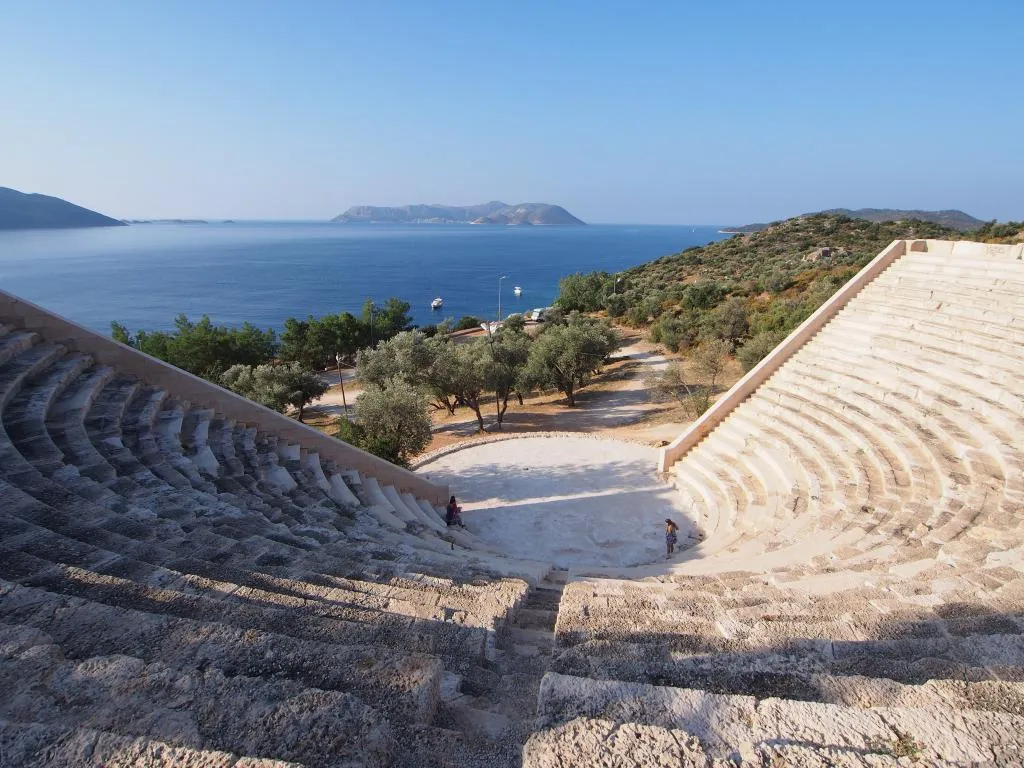
You do not have to go far to see this past. The ancient theatre on the west side of town dates from the 1st century BC; with 26 rows of seats and room for nearly 4,000 people, it faces the sea. Sitting on its steps at sunset, looking across to Kastellorizo, is one of the simplest pleasures in Kaş. The King’s Tomb at the top of Uzunçarşı dates from the 4th century BC and carries an eight-line inscription in Lycian.
Roads Drawn by the Land
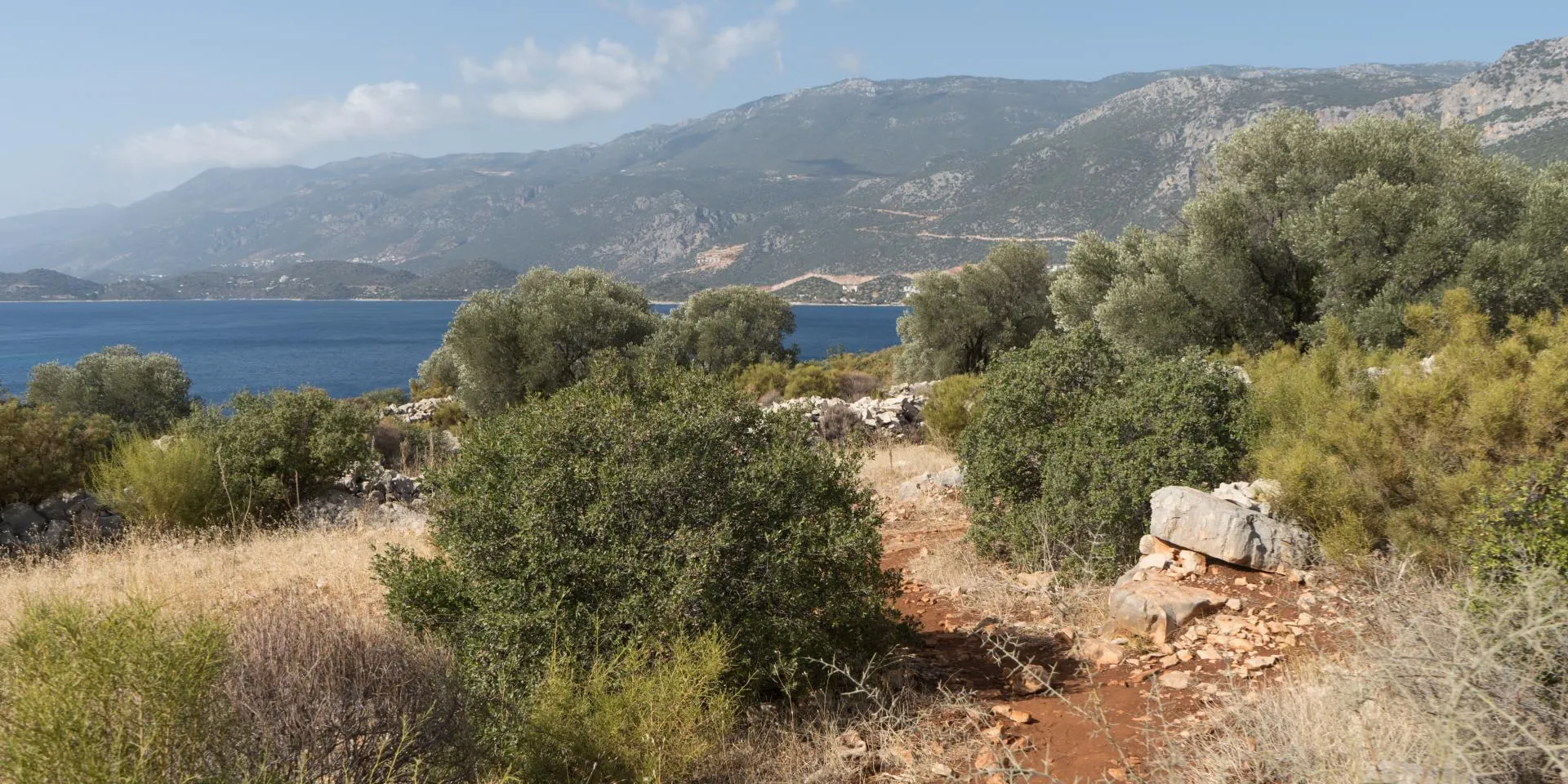
Roads do not go where we want them to; they go where the land lets them. They wind around a steep ridge, swing close to a spring, look for a safe pass. When you see an old stone step, it is hard to say which century it comes from; the same paths were used and reshaped again and again over hundreds of years. And the interesting question is not how old the path is, but why people always chose that particular pass.
Along the coast, the sea was often the best way to carry goods, but wind, season and sheltered coves decided how a voyage went. Produce grown inland had to come down to the harbour, and goods arriving at the harbour had to go up to the highlands. Coast and highland were not two separate worlds but two neighbours, constantly trading.
The Lycian Way follows these old traces too. Waymarked by Kate Clow in 1999, the route runs from Fethiye to Antalya and today covers more than 500 kilometres. Parts of it are Roman road, parts old village paths, mule tracks and caravan routes, and parts forest roads. So not every metre of it is ancient, but as you walk you can feel how many decisions a journey used to demand.
When you walk around Kaş, ask yourself: if I had no car and had to carry everything on my back, which way would I go? Along the open ridge in the sun, or through the longer but shady valley?
For what to notice in the rock, the water and the seasons along the way, see What to look for on a walk in Kaş.
Life Moves Up for the Summer
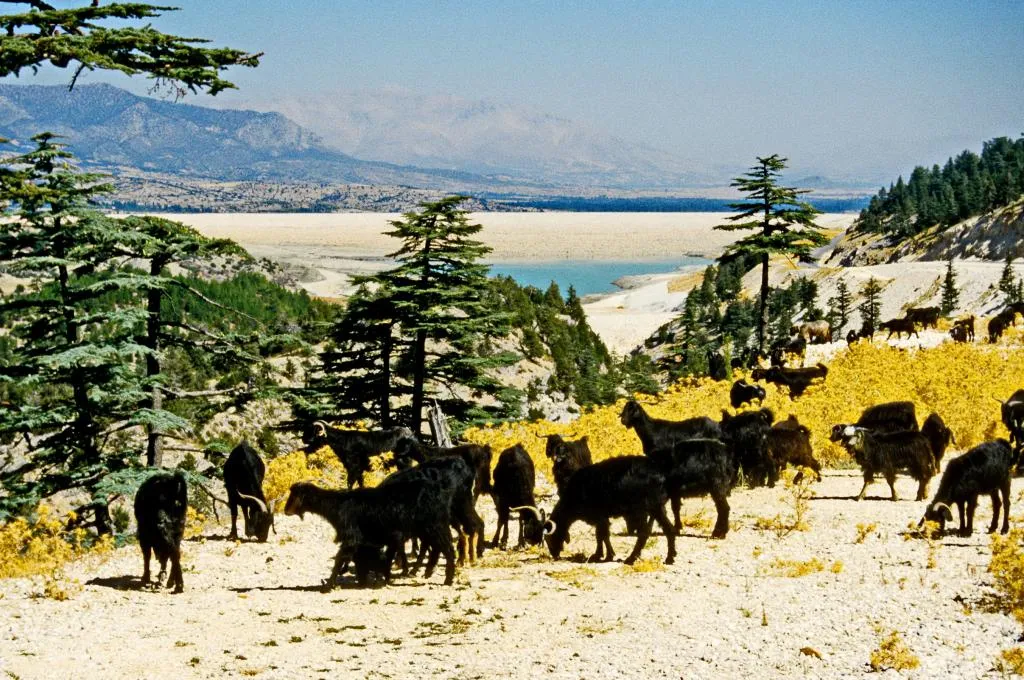
For most of us today, going up to the highland pastures (yayla) means escaping the heat for a cool day out. For families who lived by herding, it was one of the most important decisions of the year. Where the flock would graze, where water would be found, when the road would be passable: all of it was worked out in advance. To see the seasonal migration only as a pretty photograph is to miss the labour behind it.
Yörük families and villagers from Kaş, Fethiye and Elmalı still go up to the highland pastures of Akdağ in spring and summer. On the Elmalı side, pastures such as Söğle, Baranda, Geçmen and Yapraklı have been used by Yörüks and shepherds for centuries.
It was not just the flock that moved up to the highlands, but the household too: food, pots and pans, bedding, everything the children needed. Who went ahead, who looked after the animals, who got the camp ready: everyone knew their part. Inside a life that looks romantic from the outside there were early starts, tiredness, being ready for the weather to turn without warning, and working together.
The words Yörük and Türkmen have not meant the same thing in every period or in every region. Rather than sticking a label on people from outside, it is better to listen to how they describe themselves. Most families have now settled; the highland tradition lives on in the kitchen, in herding, in place names and in family memories.
What the Tradition Has Left Today
You can still see traces of highland life at the table and in handicrafts. Söğle cheese is matured for about four months in centuries-old wells. On the Söğle highland, traditional hives hung in the trees, known as arı serenleri, are still in use. Elmalı’s goat-hair rugs, woven with a butterfly motif, carry on the Yörük weaving tradition.
If you get chatting over tea in a highland village, ask: “How did you used to get up here?” They might tell you about an old path, the village they went down to for the winter, or the site of a camp no longer used. Every family will tell it differently, and that variety is exactly what keeps this culture alive.
If you would like to go up to the highlands yourself, our day route to Gömbe and Elmalı is in From Sea to Mountain.
Cover photo: Alexkom000, CC BY 4.0, Wikimedia Commons.