

 Activities & Sports
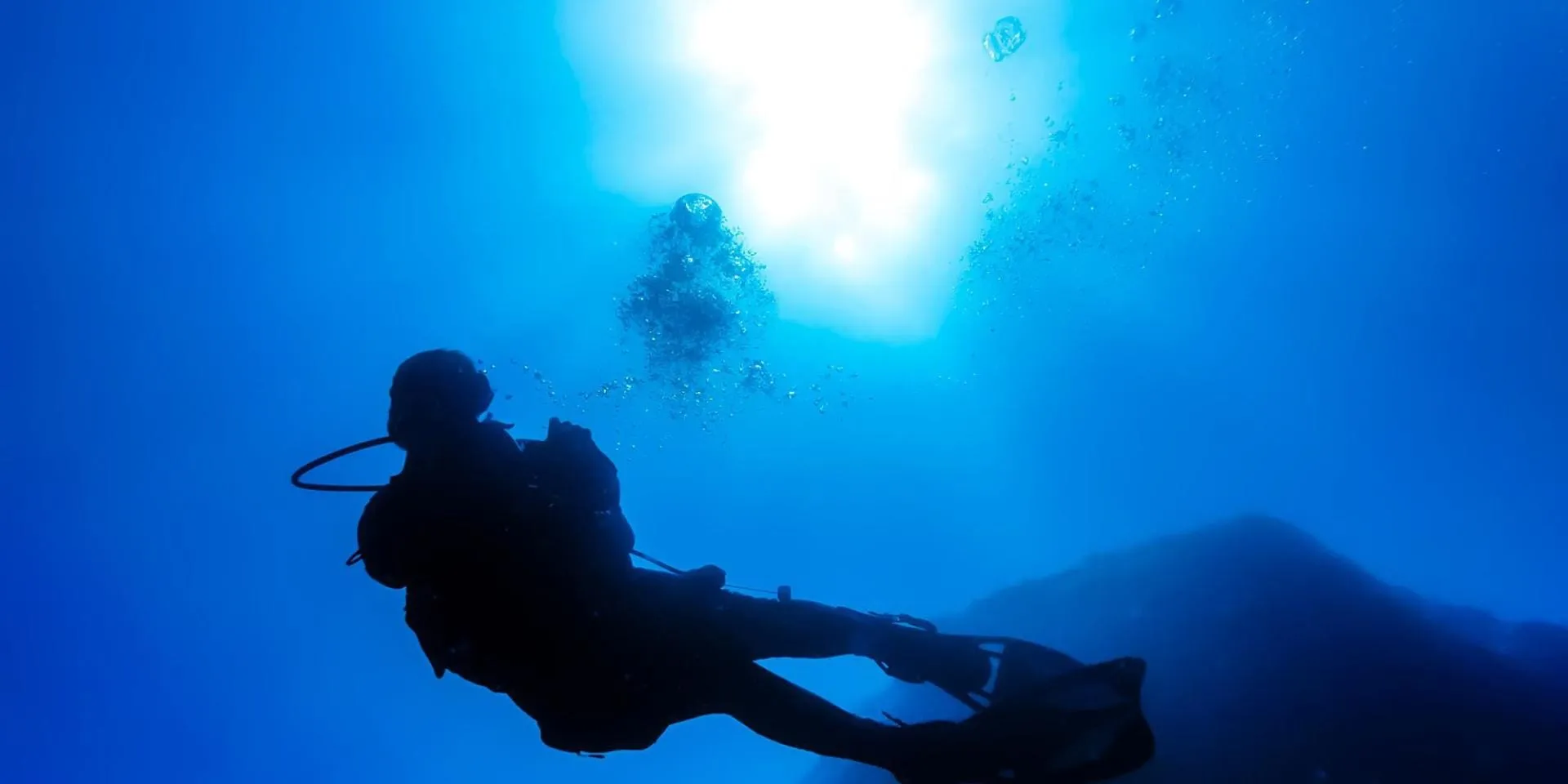
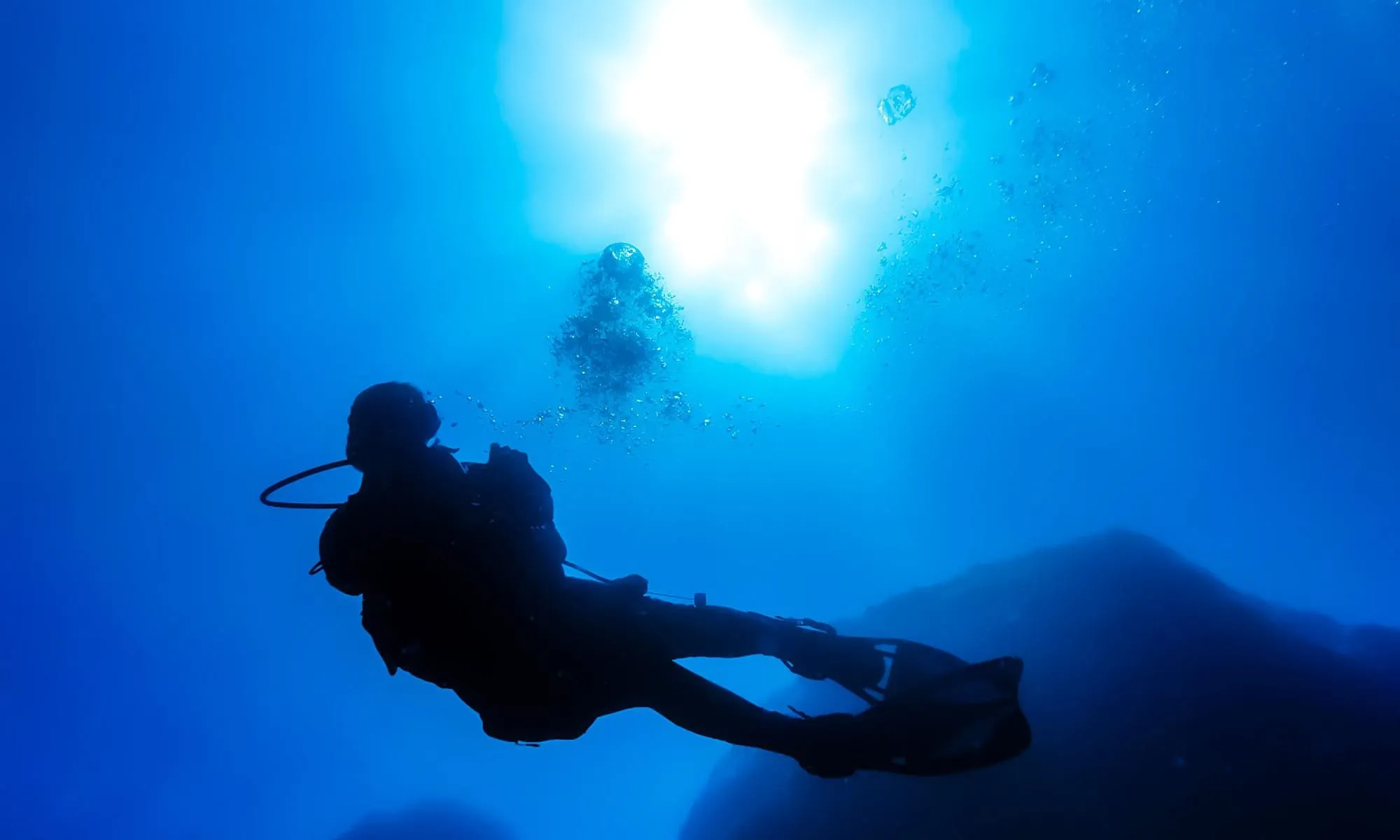
 Kaş was a diving town before it was a holiday town, and it still is one. The reason is the geology: this coast is limestone, so the seabed drops away in walls and canyons rather than shelving gently, and cold fresh groundwater surfaces through it and keeps the water unusually clear. Add two aircraft, several ships and a good deal of Bronze Age and Roman debris, and you have a site list that runs from a first try-dive to a mixed-gas descent to 71 metres.
Below is what is down there and roughly how deep. Take the depths as orientation rather than as a plan.
Before Anything Else
How diving works here
Every site on this page is reached by boat and dived with a Kaş dive centre. You cannot shore-dive most of them and you should not try.
Depths and conditions vary with current, season and swell, and a site that is straightforward one morning can be cancelled the next. Your guide decides on the day, not this article.
The deep wrecks are technical dives on mixed gas, not sport dives with a bit more weight.
If You Have Never Dived
- Güvercin Ada. The obvious first dive. Shallow water in the bay with Kemal Tufan’s shark sculpture standing on the bottom, which gives a beginner something to swim towards. Experienced divers use the same island for its wrecks and amphorae, so a mixed group can share a boat.
- Besmi Island, north-east side. Shallow enough for a try-dive, close to Meis, and shaped like a shoe, which is how it got its reputation before it got its name. The water deepens towards the south-west, so the same island serves every level.
- Çapa Banko. Anchors visible even in the shallows, plus amphorae and a millstone. Good marine life. There is a cave at 35 m which is not suitable for diving; stay out of it.
- Limanağzı Fener. Close to town, dived at every level and also used for night dives. At 22 m there is a Dakota C-47 aircraft, decommissioned and sunk deliberately, and the cargo bay is open enough for novices to swim through.
The Wrecks
Uçanbalık Bankosu holds the one people come for: a Savoia-Marchetti SM.79 Sparviero, the Italian three-engine bomber, shot down by anti-aircraft fire while bombing Meis during the Second World War. It lies between 55 and 71 metres. This is a mixed-gas technical dive for divers qualified and current at that depth, and it is called off for current more often than any other site here. Those who make it report dentex, amberjack, barracuda and grouper around the airframe.
The Dimitri, at the Canyon, is the popular one. A cargo ship that ran aground in 1968 and was later blown up with dynamite; fragments lie in the first five metres, and the main wreck sits between 27 and 42 metres. She carried cotton, which is why everyone calls her the Pamuk wreck. She is old and fragile, so look and do not touch. On the route there is a memorial to Gökhan Türe, well known to the Kaş diving community, which you will pass at around 30 metres.
Two more. A wooden Ottoman wreck at 23 m off Limanağzı, with a large water jar still in place. And the coast guard vessel TCSG-119 at 30 m on the Neptün site, where the shallowest point is only 8 m and the amphorae date from the second century.
Walls, Canyons and Caves
The dives that are about the rock rather than what sank onto it.
Büyük Mağara
A large cave, roof at 32 m and floor at 40. Experienced divers only, and a torch is not optional. Neptune's lace and shoals of shrimp inside. If you are prone to feeling rushed, do the shallow section outside the entrance instead.
Pina Banko
Named for the fan mussels on it. A V-shaped canyon between two walls, down to about 23 m. Straightforward and photogenic.
Çoban Burnu tunnel
A ten-metre tunnel you can see clear through from the entrance. Dived in the morning: there is no current, but wind and swell shut it down after lunch.
Oasis Banko
A pinnacle rising to 16 m just north of the Canyon, with grouper and dusky grouper, amphorae on the bottom and the remains of a wooden wreck as you work east.
Sarıot, the South Wall
Further from Kaş and worth the boat ride. Follow the wall and do not leave it, because the current can push. Suitable for less experienced divers, and the return leg is the easier one.
Onüç Banko
Open water on the Kekova road, for experienced divers. Significant current, which is exactly why the fish are there.
Archaeology Underwater
Hidayet, the cove named after the man who looked after it, has a dive site a little offshore known as the underwater archaeopark, or locally as the Stonehenge for the way the seabed is arranged. On the east side, at Uluburun, sits a wreck and a spread of amphorae. Be clear about what this is: the famous Uluburun ship, a Late Bronze Age vessel and one of the most important wrecks ever excavated, is in the museum at Bodrum. What lies here is a replica, built in Kaş and sunk on purpose, and it is none the worse for it.
Kovanlı Island takes its name from the beehives local people once kept on it, and it is the best site here for anchors and amphorae. Neptün and Çapa Banko both have amphorae too, the latter with a millstone alongside.
What You Will See, and What You Must Leave Alone
Grouper and dusky grouper on most of the banks, dentex, amberjack and barracuda in the current, rays, moray and stingray over the mixed sand and rock at Heybeli, and loggerhead turtles anywhere. Deve Taşı, two humps rising to 14 m and named for the obvious reason, is a good one for grouper if you have the experience.
Mağara II, dived when the wind is easterly because it is sheltered then, has a wooden boat at 24 m known as the Lycian wreck, and a cave further north. Entering that cave is prohibited. It is a Mediterranean monk seal haul-out and it is protected, and the monk seal is one of the most endangered marine mammals in the world. Dive the site, admire the entrance, stay outside.
The whole area is the Kaş-Kekova Special Environmental Protection Area. Nothing comes up: not an amphora fragment, not a piece of the Dimitri, not a shell.
Frequently Asked Questions
Is Kaş good for beginners?
Yes. Güvercin Ada, the north-east side of Besmi Island, Çapa Banko and Limanağzı Fener are all shallow and sheltered enough for a try-dive or a first qualification, and the same boats serve experienced divers, so mixed groups work.
What is the deepest dive in Kaş?
The Savoia-Marchetti SM.79 bomber at Uçanbalık Bankosu, lying between 55 and 71 metres. It is a mixed-gas technical dive for appropriately qualified and current divers only, and it is cancelled for current more often than any other site here.
Can you dive the aircraft wrecks?
Two of them, at very different levels. The Dakota C-47 at Limanağzı sits at 22 m and was sunk deliberately, with a cargo bay open enough for novices. The SM.79 at 55 to 71 m is technical diving and not comparable.
When is the diving season in Kaş?
Centres operate through most of the year, with the best conditions from May to October. Water temperature and visibility peak in late summer, though cold freshwater upwellings mean you can hit a sharp thermocline at any time.
Do you need a licence to dive in Kaş?
Not for an introductory dive, which is done under direct supervision in shallow water. For everything beyond that you need a recognised certification, and for the deep wrecks a technical qualification that is current.
Are there rules about what you can touch?
Yes, and they matter. The whole coast is a Special Environmental Protection Area. Nothing may be removed, the older wrecks are fragile enough that touching damages them, and the monk seal cave at Mağara II is closed to divers entirely.
EIGHTEEN SITES, ONE HARBOUR
Walls, canyons, two aircraft and a Bronze Age replica, all within an hour of the quay.
Luna Kaş is a few minutes from the boats.